
Listen
“Lord, teach us to pray, as John also taught his disciples.”
2 CORINTHIANS 10:3–5
Encounter
This devotional is lengthy, but it is written with extreme urgency.
Read
This devotional is lengthy, but it is written with extreme urgency. I’ve fought on the frontlines of war, and there’s no way I can prepare you physically nor mentally for what’s to come. But reading this will prepare you spiritually. We must first understand the nature of the battle we are in.
In 2 Corinthians 10:3–5, the Bible says, though we live in the world, we do not wage war as the world does. Prayer is not a passive routine; it is a spiritual weapon with divine power. It is through prayer that we confront strongholds, dismantle deception, and bring every thought into obedience to Christ. This is why learning to pray the way Jesus taught His disciples is essential. Biblical prayer trains us to fight the right battles in the right way, not with human effort, but with spiritual authority, aligning our minds, our words, and our will with God.
In Luke 11:1, Scripture records a request from the disciples: “Lord, teach us to pray, as John also taught his disciples.”
They didn’t ask for more power, more miracles, more authority to cast out more demons, or deeper revelation. They asked to be taught how to pray. That request is significant.
No, you cannot approach God in any manner you choose, driven solely by impulse or desire. Scripture teaches that prayer is not an open invitation to present demands shaped by the lust of the flesh, the lust of the eyes, or the pride of life (1 John 2:16). When our focus is on personal comfort, convenience, or consumption, we are not truly praying, we are preying, fixated on obtaining what we want rather than aligning with God’s will. James 4:3 reminds us that asking with wrong motives leads to empty results.
True prayer is not self-centered expression; it is communion. It is adoration that honors God, thanksgiving that acknowledges His goodness, confession, supplication, and intercession that stands in the gap for others. It is also listening to God and spiritual alignment that brings our thoughts, desires, and will into agreement with His. In its fullness, prayer is relational partnership with God, where His will, not ours, is discerned, embraced, and established in the earth (Matthew 6:10).
Why This Matters
The disciples had already seen miracles, authority over demons, and supernatural provision. But they recognized something deeper: Jesus’ power flowed from His private prayer life.
So instead of asking for more results, they were asking how to gain access to source. In response, Jesus gave what we now call “the Lord’s Prayer,” but it’s really the pattern, training manual, framework, and blueprint for how we ought to pray.
Jesus did not give a script to recite. He revealed a structure to realign the heart. Prayer is not about saying the right words. It is about being rightly positioned and aligned with God’s Word.
The Pattern of Prayer: Six Movements of Alignment
1. Honor God First
“Our Father which art in heaven, Hallowed be thy name…”
Prayer begins with recognition, not requests.
Before anything is asked, God is acknowledged as a communal Father and revered as holy. This establishes relationship and reverence at the same time. He is both near and set apart.
“Enter into his gates with thanksgiving, and into his courts with praise…” (Psalm 100:4)
“Give unto the Lord the glory due unto his name…” (Psalm 29:2)
“The name of the Lord is a strong tower: the righteous runneth into it, and is safe.” (Proverbs 18:10)
Never allow the posture of your heart to start prayer by talking about your problems. You start by honoring His position. Because when God is placed correctly, everything else is seen correctly.
2. Align With His Will
“Thy kingdom come. Thy will be done…”
Prayer is NOT about getting God to agree with you. It is about coming into agreement with Him. It’s not about saying, “God do what I want,” it’s saying, “God, be who you are.”
This line dismantles personal agendas and invites divine authority. It shifts prayer from desire-driven to kingdom-centered.
Jesus modeled this in His own surrender, “Nevertheless not my will, but thine, be done.” (Luke 22:42)
And Scripture affirms: “If we ask any thing according to his will, he heareth us.” (1 John 5:14)
True prayer is not persuasive. It is submissive alignment.
3. Depend on Him Daily
“Give us day by day our daily bread…”
This is not a prayer for excess. It is a declaration of dependence for supplication.
Daily bread represents provision that is consistent, not excessive. It trains the believer to rely on God continually, not occasionally.
This echoes the pattern in the wilderness: “Gather of it every man according to his eating… daily.” (Exodus 16:4) And Jesus reinforces the mindset: “Take therefore no thought for the morrow…” (Matthew 6:34)
God does not just supply needs. He sustains relationship through dependence.
“Daily bread” is also a desire for God’s Word and His voice. He is first teaching dependence on God for physical sustenance, echoing the wilderness pattern where God provided manna daily (Deuteronomy 8:3), yet Scripture also reveals that man does not live by bread alone but by every word that proceeds from God. Jesus deepens this understanding by declaring Himself the Bread of Life (John 6:35) and affirming that His words are spirit and life (John 6:63), showing that true sustenance is both natural and spiritual. Therefore, praying for daily bread is not only asking God to meet physical needs but also asking Him to sustain us through His presence, guide us through His Word, and keep us dependent on Him each day. It is a prayer that says: provide for me, speak to me, and sustain me—because without Your provision I cannot live, and without Your Word I do not know how to live.
4. Seek Forgiveness
“And forgive us our sins…”
Prayer requires honesty. Before you can move forward with God, you must deal truthfully with what stands between you and Him. This is not about shame. It is about cleansing.
Scripture makes this clear “If we confess our sins, he is faithful and just to forgive us…” (1 John 1:9) “He that covereth his sins shall not prosper…” (Proverbs 28:13)
Unconfessed sin clouds clarity. Forgiveness restores connection.
5. Walk in Forgiveness
“…for we also forgive every one that is indebted to us.”
You cannot receive what you refuse to release.
This is one of the most weighty conditions in all of Scripture. God ties His forgiveness of us to our forgiveness of others.
Jesus reinforces this plainly: “But if ye do not forgive, neither will your Father… forgive your trespasses.” (Mark 11:26)
And again: “Forgiving one another… even as God for Christ’s sake hath forgiven you.” (Ephesians 4:32)
Forgiveness is not optional. It is evidence of transformation.
6. Ask for Guidance and Protection
“And lead us not into temptation; but deliver us from evil.”
This is not a request to avoid life. It is a request for preservation within it.
Temptation is inevitable, but direction matters. Prayer acknowledges human weakness and invites divine guidance and protection.
Scripture clarifies: “God is faithful, who will not suffer you to be tempted above that ye are able…” (1 Corinthians 10:13)
“Deliver me, O Lord, from the evil man…” (Psalm 140:1) And wisdom reminds us: “Trust in the Lord… and he shall direct thy paths.” (Proverbs 3:5–6)
You are not asking to escape the world. You are asking to walk through it without being overtaken by it.
Rearm Your Pray Life
Prayer is not about repetition. It is about realignment. It moves you from self to surrender, from control to trust, from independence to dependence, from offense to forgiveness, and from vulnerability to covering.
The Deeper Insight
The disciples didn’t just want to pray. They wanted to pray like Him. Not routine. Not religious. But relational. Consistent. Power-filled. And this is what happens when our prayers align with God’s word and are in agreement with heaven.
The war is not coming, it is already here. Not with sirens and soldiers alone, but in the realm of the mind, the heart, and the spirit. Deception is increasing. Distraction is multiplying. Conviction is being replaced with comfort. And while many remain passive, the enemy is already waging war on American soil, targeting belief, identity, truth, and obedience. This is not the hour to be casual in your prayer life. This is the hour to be trained, aligned, and alert.
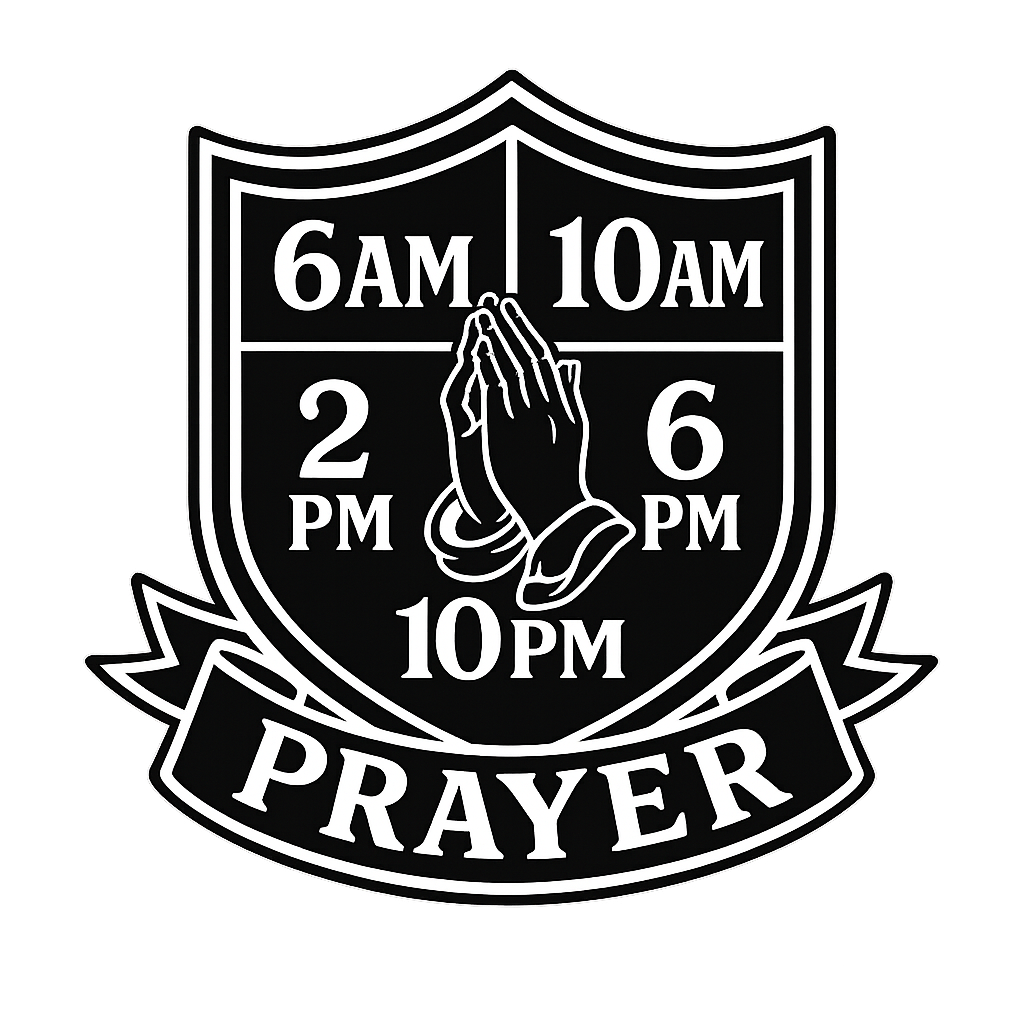
I’ve written this because I love you. Scripture reminds us that we do not wrestle against flesh and blood (Ephesians 6:12). If you are not praying with intention, you are already being influenced without realizing it. Stop preying and start praying. Set your alarm to blend your voice in prayer with hundreds who have committed to praying five times daily: 6 am, 10 am, 2 pm, 6 pm, and 10 pm. I hope this devotional calls your spirit to attention. Rearm your prayer life. Realign your heart. Because victory is not given to the informed, it is given to the prepared.
moment: be still, and invite the Lord to apply what you have read.
Go Deeper in Scripture
2 Corinthians 10:3–5
For though we walk in the flesh, we do not war after the flesh: (For the weapons of our warfare are not carnal, but mighty through God to the pulling down of strong holds;) Casting down imaginations, and every high thing that exalteth itself against the knowledge of God, and bringing into captivity every thought to the obedience of Christ;
“Lord, teach us to pray, as John also taught his disciples.
1 John 2:16
For all that is in the world, the lust of the flesh, and the lust of the eyes, and the pride of life, is not of the Father, but is of the world.
Scripture teaches that prayer is not an open invitation to present demands shaped by the lust of the flesh, the lust of the eyes, or the pride of life (1 John 2:16).
James 4:3
Ye ask, and receive not, because ye ask amiss, that ye may consume it upon your lusts.
James 4:3 reminds us that asking with wrong motives leads to empty results.
Matthew 6:10
Thy kingdom come. Thy will be done in earth, as it is in heaven.
In its fullness, prayer is relational partnership with God, where His will, not ours, is discerned, embraced, and established in the earth (Matthew 6:10).
Reflect
Days 1–2
- What line from this lesson is God pressing on your heart?
- Where might pride, fear, or distraction be resisting obedience?
Days 3–4
- Which scripture references will you re-read slowly in context this week?
- Who needs an encouraging word rooted in what you learned?
Days 5–7
- What is one concrete step of obedience you will take?
- How will you remember this lesson after the week ends?
Respond
TRUST THE LORD
Lord, thank You for this week’s word. Shape my heart by Scripture, not by noise or status. Where I have chased recognition, return me to simple obedience. Let the truth I have read bear fruit in love and humility. Amen.
Walk it out
- Re-read one key passage from this lesson in the KJV, in full context.
- Share one sentence of encouragement with another believer.
- Take one quiet act of obedience you have been postponing.
- Pray briefly each morning: “Lord, let Your word rule my choices today.”
He careth for you.
Reflect
Log in to save your reflections across devices.